Beyond Short-Term Slogans: Mazhar Abbas on Pakistan's Governance Cycles
Journalist Mazhar Abbas highlighted Pakistan's cycle of changing national policy paradigms every few years. This editorial examines the impact of governance shifts on public welfare and state development.
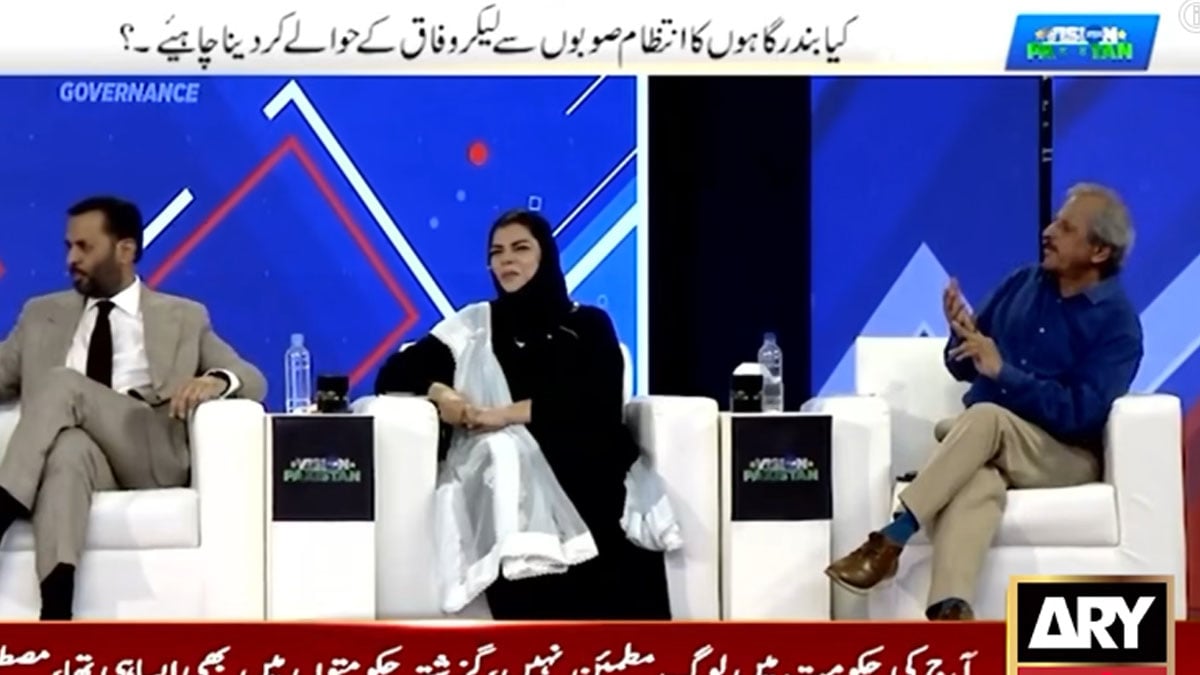
Veteran journalist and political analyst Mazhar Abbas recently offered a poignant critique of the nation's political trajectory, observing that political leaders repeatedly attempt the task of building a new Pakistan every few years. This reflection captures a fundamental challenge in the country's governance history: the tendency of incoming administrations to discard existing policies in favor of short-term, newly branded political paradigms. Rather than building upon established institutions, each political era often attempts a complete structural reset, leaving public administration in a state of persistent transition and institutional fatigue.
The Mechanics of Frequent Policy Resets
In his commentary, Mazhar Abbas highlighted how the political discourse in Pakistan routinely revolves around grand promises of transformation. Every few years, new leadership promises a departure from the past, introducing new slogans, socio-economic packages, and administrative frameworks. While national reform is a noble objective, the practical execution often results in the premature abandonment of ongoing initiatives.
When long-term projects are evaluated strictly through a partisan lens rather than an institutional one, valuable resources are frequently wasted. Infrastructure developments, administrative reforms, and public service delivery mechanisms are routinely paused, overhauled, or renamed simply to signal a political shift. This lack of policy continuity prevents the state from establishing deep-seated structural stability, creating a governance environment where long-term planning is continuously subordinated to short-term political narratives.
Key Consequences of Policy Discontinuity
The habit of reinventing governance frameworks every few years carries significant operational costs across the public sector. When state machinery is forced to reorient its focus after every political transition, several systemic issues emerge:
- Incomplete Infrastructure Works: Civil projects and public works often face severe delays or budget inflation when newly formed administrations deprioritize ongoing developments initiated by predecessors.
- Administrative Paralysis: Frequent shifts in national priorities leave civil servants in state departments constantly re-adapting, leading to operational delays and diminished institutional memory.
- Erosion of Investor Confidence: Foreign and domestic investors require predictable regulatory environments. Continuous changes in fiscal and economic policies make long-term financial commitments risky.
- Resource Waste Through Rebranding: Substantial public funds are expended when existing social programs or municipal initiatives are renamed and launched under new managerial structures.
- Fragmentation of Public Welfare: Beneficiaries of state assistance programs face uncertainty when eligibility criteria, disbursement channels, or program identities are altered mid-stream.
What This Governance Cycle Means for Ordinary Citizens
For the average Pakistani, the recurring cycle of political resets has tangible, daily consequences. Public welfare programs, vocational training initiatives, and community assistance schemes are designed to uplift vulnerable populations over extended periods. However, when these initiatives are subjected to constant political restructuring, the end beneficiaries bear the burden of administrative disruption.
Consider how socio-economic assistance reaches families across various provinces. When a program undergoes a name change or structural redesign, verification databases may be audited, funding allocations paused, and delivery mechanisms restructured. During these transition periods, families relying on consistent state support face immediate financial vulnerability and administrative hurdles. Similarly, young professionals and skilled workers seeking government-backed loan schemes or employment initiatives find that opportunities appear and disappear depending on political cycles, making long-term career planning difficult.
Moreover, local civic infrastructure—ranging from road maintenance and clean water projects to public health facilities—often suffers from fragmented funding. A project started under one mandate may sit half-finished for years if a subsequent administration redirects budget allocations toward its own flagship programs. Consequently, taxpayers watch essential public facilities remain underutilized while new projects are announced elsewhere, creating a persistent gap between policy promises and on-the-ground reality.
Moving Toward Policy Continuity and Institutional Growth
Addressing the challenges outlined by Mazhar Abbas requires a fundamental shift in how governance is conducted. Sustainable national progress depends on establishing a cross-party consensus on baseline economic, educational, and social welfare priorities. When key development goals are protected by legislative frameworks rather than executive whims, administrative initiatives can mature and deliver their intended benefits over decades rather than months.
Strengthening permanent institutions—such as the civil service, planning commissions, and judicial regulatory bodies—is essential for safeguarding public policy against sudden political shifts. When institutions possess the autonomy to maintain core public services regardless of political transitions, the nation can achieve genuine development without needing to start from scratch every few years.
For citizens seeking accurate information regarding current social welfare programs, economic schemes, or public sector recruitment alerts, it remains crucial to consult official government departments and verified public notices directly. Reliance on verified official channels ensures accurate guidance amidst changing policy landscapes.
Source: ARY News
Get alerts in your inbox
Weekly roundup of Punjab schemes, Pakistan jobs, and Gulf opportunities.