Chinese Robot Beats Usain Bolt’s 100m World Record in Test Run
A Chinese robot has reportedly surpassed Usain Bolt's 100-meter sprint mark during a controlled test run, demonstrating significant progress in high-speed mechanical locomotion.
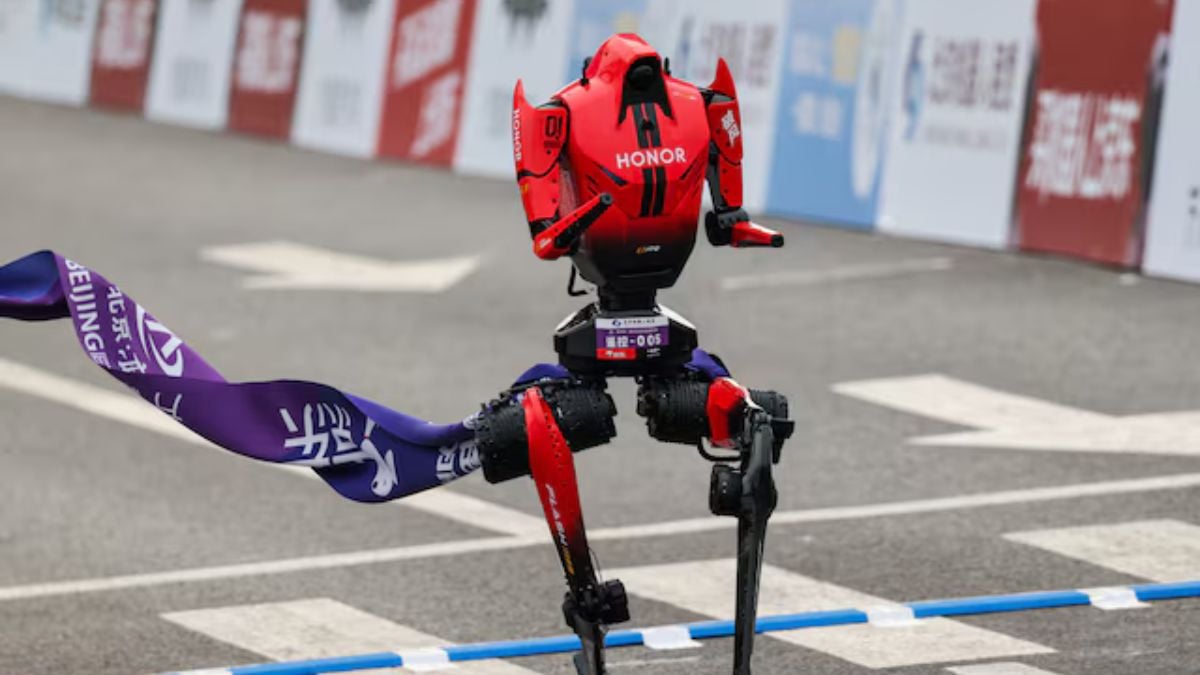
In a remarkable demonstration of modern mechanical engineering and artificial intelligence, a Chinese robot 100m world record performance has set a new precedent for autonomous mobility. According to initial details from trial evaluations, the robotic system successfully surpassed the sprint benchmark held by legendary runner Usain Bolt during a controlled test run. This milestone illustrates the extraordinary pace at which high-speed robotics, dynamic balance systems, and artificial intelligence integration are advancing in contemporary technology research.
Breaking Down the Speed Achievement in Modern Robotics
Reaching top-tier athletic speeds with a mechanical structure presents complex engineering hurdles. Human sprinters rely on precise muscular coordination, tendon energy storage, and immediate balance adjustments. For a robotic system to mirror and exceed these human capabilities, development teams must solve difficult challenges involving motor torque generation, structural weight distribution, and real-time feedback processing.
During high-speed locomotion, an autonomous unit must continuously recalculate surface friction, joint angles, and center-of-mass trajectory at hyper-fast intervals. Failing to make these minor adjustments instantaneously can lead to mechanical instability. While exact performance logs, telemetry details, and hardware specifications should be confirmed directly through official technical releases from the developers, this test run proves that physical robotics is transitioning from basic functional movement to high-performance mobility.
What It Means for Ordinary Citizens and Everyday Life
For members of the general public, a machine outrunning an elite human athlete may seem like a novelty, but the core innovations driving this speed have direct applications in everyday life. The precise engineering required to keep a machine balanced while running at maximum speed is identical to the technology needed for real-world tasks in dangerous or demanding environments.
Key areas where these high-speed advancements will benefit ordinary citizens include:
- Emergency Rescue and Disaster Response: High-speed balance systems allow autonomous units to move quickly across unstable debris, entering burning structures or hazardous sites to save lives without risking human emergency personnel.
- Automated Supply Chains: Rapid movement and stabilization algorithms enable smoother operations in logistics centers, helping process packages faster and lower consumer shipping costs.
- Next-Generation Prosthetics: The dynamic control software and lightweight actuators designed for rapid robots can be adapted into smarter, more responsive mobility aids for people living with disabilities.
- Industrial Workplace Safety: Swift, agile machines can take over high-risk physical tasks in factories and construction zones, reducing workplace injuries for human laborers.
Safety Standards, Policy, and Future Benchmarking
As mechanical systems approach and exceed human physical capabilities, questions regarding public safety standards and regulatory policies naturally emerge. Deploying high-speed autonomous hardware requires strict testing protocols, fail-safe mechanisms, and controlled environments to ensure reliable operation alongside humans.
Tech analysts note that while laboratory test runs demonstrate immense physical potential, practical everyday deployment requires further validation under variable weather conditions, uneven terrain, and unpredictable real-world obstacles. Members of the public seeking detailed technical breakdowns, timing data, and project updates should monitor official engineering disclosures and verified technology news sources as additional documentation becomes available.
The successful test run marks an undeniable turning point in autonomous physical mobility. As engineering teams continue refining high-performance mechanics, the gap between synthetic capabilities and human physical benchmarks will continue to shift, opening new possibilities across global industries.
Source: ARY News
Get alerts in your inbox
Weekly roundup of Punjab schemes, Pakistan jobs, and Gulf opportunities.