Erdogan Calls for Expansion of Makkah Joint Defence Agreement
Turkish President Recep Tayyip Erdogan has called for expanding the Makkah Joint Defence Agreement between Turkiye, Saudi Arabia, and Pakistan to include additional regional partners.
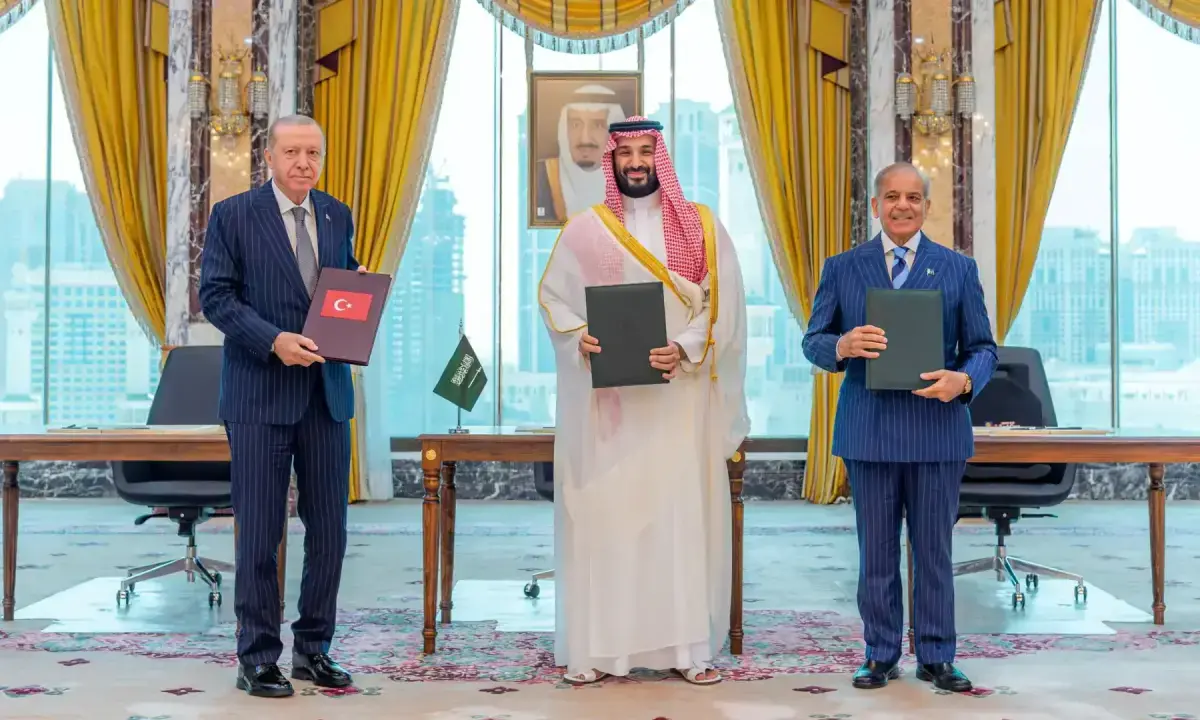
Turkish President Recep Tayyip Erdogan has publicly expressed his desire to see a broader coalition build around the newly established Makkah Joint Defence Agreement. Formally signed last week in Makkah between Turkiye, Saudi Arabia, and Pakistan, the trilateral security arrangement aims to foster collective stability and mitigate security risks in a region increasingly disrupted by escalating geopolitical clashes. Addressing observers earlier this week, President Erdogan emphasized that expanding the agreement to encompass additional regional partner states remains a key strategic goal for ensuring long-term peace across the Middle East and surrounding territories.
The announcement comes at a pivotal moment for the international community as Middle Eastern security faces heightened strain due to spillover effects from wider confrontations involving the United States, Iran, and various regional actors. By establishing a cooperative defense framework among three major Muslim-majority nations—spanning key geographical zones from South Asia to the Anatolian peninsula and the Gulf—the founding parties seek to create a dependable axis of deterrence and strategic alignment. Official statements highlight that the initiative is designed not as an aggressive bloc, but as a constructive security umbrella capable of preventing further fragmentation in a volatile security landscape.
2>Key Objectives and Strategic Expansion of the Trilateral Security PactThe primary mandate of the security pact rests upon enhancing mutual defense coordination, exchanging defense expertise, and creating a unified platform for addressing common security challenges. President Erdogan’s call to invite new participating nations highlights an intention to transform a tripartite alliance into a broader regional security architecture. As diplomatic dialogues continue, representatives from Turkiye, Saudi Arabia, and Pakistan are expected to assess potential candidates who share similar defense concerns and strategic priorities.
The potential growth of this alliance reflects a growing trend toward localized, cross-regional security solutions designed to manage crises directly rather than relying solely on external global powers. Some of the core focus areas underlying this collaborative initiative include:
- Regional Peacebuilding: Establishing unified mechanisms to reduce tensions and deter regional conflicts from spreading into broader theatres of war.
- Multilateral Military Cooperation: Strengthening defense ties between South Asian, Middle Eastern, and European-adjacent security infrastructure.
- Joint Defense Coordination: Facilitating strategic alignment among partner nations to protect vital territorial and maritime interests.
- Inclusivity for Future Members: Opening pathways for other regional nations to join the arrangement and contribute to collective security goals.
While the initial accord was finalized in Makkah between the three founding nations, diplomatic observers note that the willingness to absorb new members could reshape defense dynamics across neighboring zones. By pooling defense capabilities, intelligence insights, and strategic positioning, the signatory nations aim to safeguard critical trade routes, energy corridors, and territorial boundaries from ongoing proxy friction and direct confrontations.
2>Navigating Middle Eastern Volatility and Conflict FalloutThe emergence of the trilateral agreement is directly linked to recent escalations in regional hostilities, particularly involving US-Iran clashes that have reverberated across multiple borders. Conflict in the Middle East has historically disrupted global shipping lanes, volatile energy markets, and international diplomatic relations. Against this backdrop, decision-makers in Ankara, Riyadh, and Islamabad have sought a proactive approach to prevent regional escalation from directly threatening their sovereign interests or broader civilian welfare.
President Erdogan pointed out that peace cannot be achieved in isolation; rather, it requires coordinated effort and diplomatic consensus among major regional stakeholders. The decision to finalize the agreement in the holy city of Makkah carries strong symbolic weight, underscoring shared cultural and strategic ties between the participating states. As regional conflicts draw in various actors and threaten economic flows, a formalized defense framework provides a structured mechanism to navigate emerging crisis scenarios collectively.
2>What the Makkah Joint Defence Agreement Means for Ordinary CitizensFor citizens residing in Pakistan, Saudi Arabia, Turkiye, and the wider region, international defense pacts often seem abstract or strictly tied to high-level geopolitics. However, security arrangements of this magnitude carry direct implications for daily civilian life, economic stability, and public peace of mind.
First and foremost, regional stability directly influences trade routes, fuel prices, and essential commodity supply chains. When conflicts erupt in the Middle East or adjacent maritime routes, everyday citizens often face inflationary pressures, rising energy costs, and economic uncertainty. By promoting a stabilized security environment, the defence agreement helps buffer domestic economies from sudden geopolitical shocks, ensuring more reliable economic conditions for families and local businesses.
Additionally, millions of Pakistani citizens reside and work across the Gulf region, particularly in Saudi Arabia. Security collaboration between Pakistan and Gulf partner states reinforces safety protocols and protects foreign workforce communities during times of regional unrest. A stable security environment ensures that overseas workers can continue contributing to local economies and sending remittances home without facing immediate security threats caused by uncontained regional conflicts.
Finally, for the general public, stronger defense partnerships mean reduced risk of cross-border security spillover, enhanced border protection, and greater confidence in national sovereignty. As diplomatic efforts progress, citizens are encouraged to follow official government announcements and verified defense bulletins for accurate updates regarding treaty developments and official policy directives.
2>Looking Ahead: Implementation and Diplomatic EngagementAs President Erdogan champions the expansion of the pact, diplomatic channels between Ankara, Riyadh, and Islamabad remain active in mapping out next steps. The success of expanding the alliance will depend on diplomatic outreach to prospective member countries and the formulation of clear operational frameworks. Readers and interested observers should continue to consult verified press releases from the Ministry of Foreign Affairs and official defense agencies to stay informed about ongoing treaty developments and formal membership announcements.
Source: Dawn News
Get alerts in your inbox
Weekly roundup of Punjab schemes, Pakistan jobs, and Gulf opportunities.