Goods Transporters Strike to Continue as Government Talks End in Deadlock
Negotiations between the federal government and the All Pakistan Goods Transport Itehad ended without resolution, leading to the continuation of the nationwide goods transporters strike.
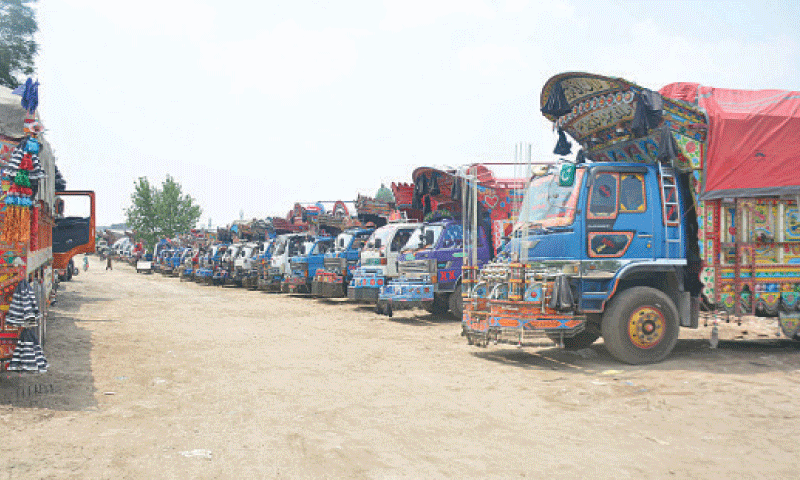
The nationwide goods transporters strike is set to persist across the country following a dialogue breakdown between public officials and industry leadership. Negotiations held at the Ministry of Communications in Islamabad between representatives of the federal government and the All Pakistan Goods Transport Itehad concluded on Tuesday without reaching a mutually agreed settlement. With key demands regarding fuel pricing mechanisms and operational regulations remaining unresolved, transport operators have affirmed that their countrywide protest action will move forward as announced.
Negotiations at Ministry of Communications End Without Consensus
The high-stakes meeting in Islamabad was convened to address the growing friction between commercial freight operators and federal authorities. Discussions focused heavily on the underlying grievances that led transport unions to call for a nationwide wheel-jam strike. Despite extended deliberations at the Ministry of Communications, both parties were unable to bridge the gap on critical operational issues.
The All Pakistan Goods Transport Itehad had previously announced the strike action on Saturday, citing severe pressures on the commercial transport sector. Because Tuesday's session produced no binding commitments or actionable solutions from the government side, union leaders declared that freight operations would remain suspended. The impasse leaves long-haul cargo movement halted across major highways, industrial routes, and trade corridors nationwide.
Core Grievances Driving the Transport Deadlock
The primary catalyst behind the current industrial action centers on policy decisions regarding petroleum product pricing. Transport operators have expressed deep dissatisfaction over the daily fixing of petrol and diesel rates, arguing that short-term price fluctuations create extreme uncertainty for long-distance logistics planning, contract fulfillment, and freight charges.
Running a commercial transport fleet requires stable operational costs to set predictable freight rates for manufacturers, traders, and agricultural suppliers. Frequent adjustments to diesel prices disrupt standard business agreements, often forcing transporters to absorb sudden cost increases that erode profit margins.
Primary Issues Raised by Freight Operators
- Daily Fuel Price Revisions: The daily adjustment mechanism for petrol and diesel prices prevents long-term freight budgeting and destabilizes shipping contracts.
- Unsettled Sector Demands: Broad operational and regulatory concerns submitted by transport associations remain unaddressed by federal ministries.
- Rising Operational Costs: Fluctuations in fuel expenses directly impact the viability of goods movement across provincial and national routes.
- Lack of Policy Consistency: Transport leaders are demanding clearer, stable, and transparent mechanisms for commercial fuel pricing and trade regulations.
What the Goods Transporters Strike Means for Ordinary Citizens
A prolonged suspension of heavy transport operations has immediate and widespread implications for the broader economy and everyday consumer life. While the dispute directly involves fleet owners and government regulators, the stoppage of cargo movement quickly ripples through retail and consumer markets.
For ordinary citizens, a full or partial wheel-jam strike can disrupt the domestic supply chain that delivers essential goods from farming regions, ports, and industrial hubs to local neighborhood markets. Cargo trucks carry vital commodities, including fresh agricultural produce, grain, processed foods, raw materials, and manufactured goods. When these supply vehicles are off the road, wholesale markets may experience reduced inventory levels.
Furthermore, supply chain delays frequently lead to temporary price volatility at local retail outlets. When supply shortages occur in fresh food markets or grocery distribution centers, consumers often face higher prices for daily staples. Extended transport disruptions can also slow down manufacturing output and delay retail supply restocks, demonstrating how critical goods mobility is to maintaining everyday economic stability for households across the country.
Navigating the Stoppage and Verifying Official Updates
As the standoff between transport representatives and federal authorities continues, market players, business owners, and consumers are closely monitoring the situation for signs of renewed dialogue. Logistics providers and commercial traders are advised to adjust shipping schedules where possible and stay informed through official announcements.
Because transport policies and strike updates can evolve rapidly, readers and supply chain managers should verify all operational directives, highway advisories, and administrative decisions directly through official government releases and verified sectoral channels rather than relying on unconfirmed social media reports.
Restoring stability to the national freight network will require balanced dialogue between federal policymakers and transport industry leaders. A fair resolution that addresses fuel pricing transparency while safeguarding public economic interests remains essential to resuming smooth logistics operations across Pakistan.
Source: Dawn News
Get alerts in your inbox
Weekly roundup of Punjab schemes, Pakistan jobs, and Gulf opportunities.