Morocco Detains Over 100 Migrants in Major Ceuta Border Crackdown
Moroccan police have arrested at least 111 people during a tightened Ceuta border crackdown following social media calls for unauthorized mass crossing attempts.
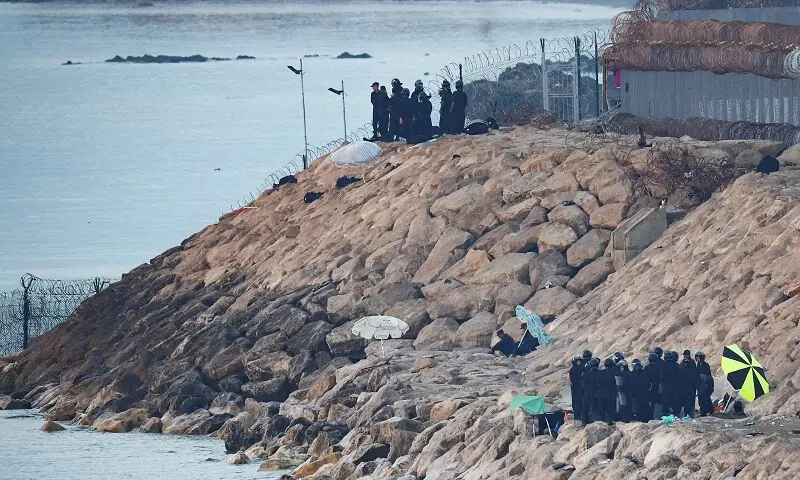
Moroccan law enforcement authorities have intercepted and detained at least 111 individuals during a widespread Ceuta border crackdown on Saturday, disrupting coordinated attempts to enter Spain’s North African enclave. The operation unfolded against a backdrop of intensified surveillance and strict patrol measures deployed on both sides of the frontier. Security agencies moved swiftly to reinforce the perimeter following viral digital calls that urged individuals to assemble for an unapproved mass border entry. This latest enforcement action underscores the volatile intersection of online mobilization, regional border management, and the high-stakes dynamics governing migration routes into southern Europe.
Heightened Border Surveillance and Social Media Mobilization
The swift intervention by Moroccan security forces reflects a proactive operational posture designed to prevent perimeter breaches before individuals reach the immediate physical boundary of Ceuta. In recent days, unverified social media campaigns circulated widely across digital networks, openly calling for another synchronized mass push across the frontier. These online appeals triggered heightened alerts among both Moroccan and Spanish authorities, prompting an immediate escalation of defensive deployments along land routes, transit points, and adjacent coastal sectors.
By acting decisively on Saturday to detain over one hundred individuals attempting the crossing, authorities sought to neutralize localized staging areas. Law enforcement on both sides of the border coordinated defensive preparations, recognizing that unmonitored mass gatherings pose severe physical risks to both the individuals attempting the journey and the personnel stationed along border installations. The reliance on digital platforms to organize large-scale crossing attempts represents a persistent operational challenge, compelling security apparatuses to continuously monitor communication channels while maintaining physical deterrence on the ground.
Broader Geopolitical Pressures and European Ramifications
Saturday’s detentions come in the wake of an extraordinarily intense period along the Moroccan-Spanish perimeter. Just two weeks prior to this latest intervention, an unprecedented surge involving more than 72,000 individuals attempting to enter Ceuta generated acute institutional strain and sparked significant political debate across the European continent. That massive influx not only overwhelmed frontline infrastructure but also reverberated directly into the political arena of the European Union, intensifying internal diplomatic tensions and amplifying wider anti-immigrant sentiment.
The pressure on North African enclaves like Ceuta highlights the delicate structural balance between origin, transit, and destination regions. When sudden surges occur, they frequently trigger political debates within European institutions regarding asylum policy, perimeter defense funding, and bilateral cooperation with transit nations. Consequently, law enforcement crackdowns along transit corridors serve not only as domestic security measures but also as strategic signals aimed at mitigating wider geopolitical friction and preserving cross-border diplomatic accords.
What the Developing Border Situation Means for Ordinary Citizens
While international headlines frequently focus on large-scale migration dynamics and law enforcement actions, such border security escalations have concrete, daily implications for ordinary citizens, cross-border workers, and the general public across the region. When security levels are heightened to counter unauthorized mass movements, the ripple effects are felt throughout civilian infrastructure.
For everyday citizens, commercial transporters, and regular travelers, heightened security protocols inevitably alter standard transit routines:
- Increased Inspection Delays: Intensified monitoring at designated border checkpoints often leads to extended processing times, stringent identification checks, and localized transportation backlogs for routine commuters.
- Heightened Legal Vulnerability: Individuals misled by unverified claims on social media face severe legal consequences, including administrative detention, formal arrest, and long-term travel bans.
- Impact on Borderland Economies: Heightened security environments and sudden crossing closures disrupt informal trade, small retail activities, and local service sectors that rely on predictable daily border mobility.
- Amplified Social and Political Friction: Large-scale border incidents tend to intensify public debate and policy polarization, frequently leading to stricter administrative scrutiny for lawful international travelers.
Ordinary citizens and international travelers are strongly advised to rely exclusively on official government communiqués rather than speculative social media content when planning cross-border transit. Remaining fully informed through verified diplomatic channels ensures personal safety and compliance with established immigration regulations.
Source: Dawn News
Get alerts in your inbox
Weekly roundup of Punjab schemes, Pakistan jobs, and Gulf opportunities.