Pakistan and US Extend Landmark Fulbright-HEC Higher Education Agreement
Pakistan and the United States have renewed the landmark Fulbright-HEC partnership, securing fully funded postgraduate scholarship opportunities for Pakistani scholars and researchers.
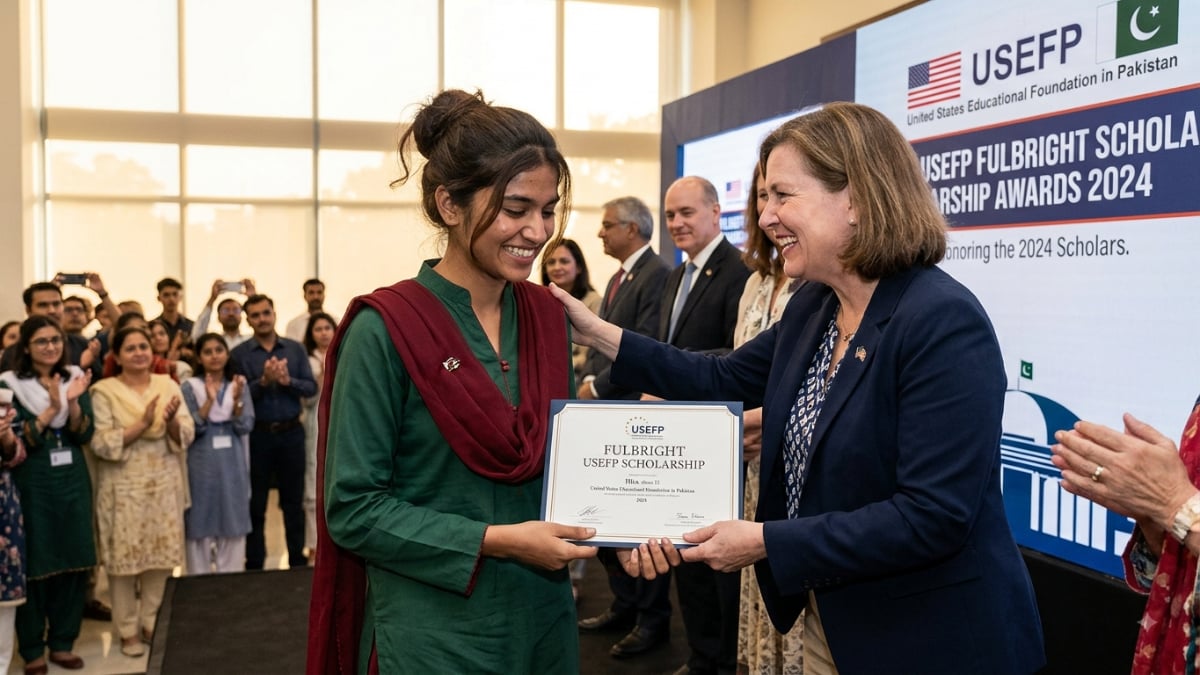
In a major development for the country's academic landscape, Pakistan and the United States have officially renewed the landmark Fulbright-HEC partnership. This bilateral educational venture continues a long-standing tradition of academic cooperation, enabling qualified Pakistani scholars, researchers, and postgraduate students to pursue fully funded Master's and PhD programs at top-tier universities across the United States. The continuation of this program reflects a shared commitment to strengthening higher education standards, fostering mutual cultural understanding, and building sustainable institutional capacity across Pakistani universities.
The agreement between the Higher Education Commission (HEC) of Pakistan and the United States Government through the United States Educational Foundation in Pakistan (USEFP) represents one of the largest Fulbright scholarship cohorts globally. Over the years, this collaborative funding mechanism has transformed thousands of academic careers, allowing talented individuals from diverse socio-economic backgrounds across all provinces and administrative regions to access world-class facilities, cutting-edge laboratories, and global academic networks.
Key Highlights of the Renewed Educational Agreement
The formal extension of this educational alliance reinforces the structured financial and administrative support required to sustain high-level international exchanges. Under the updated framework, joint investments will ensure that deserving candidate selections remain merit-based, inclusive, and transparent.
Major focus areas within the renewed partnership include:
- Sustained Funding for Postgraduate Degrees: Continued financial assistance for fully funded Master's and PhD degree programs in critical academic disciplines.
- Emphasis on Inclusive Representation: Special efforts to encourage applicants from underrepresented districts, public sector universities, and female scholars across Pakistan.
- Capacity Building in Priority Sectors: Support for fields that align with national development priorities, including science, technology, engineering, public policy, climate change, agriculture, and health sciences.
- Institutional Research Collaboration: Facilitation of joint research initiatives and institutional links between American higher learning institutions and Pakistani academic departments.
What the Fulbright-HEC Partnership Means for Ordinary Citizens
For ordinary citizens, aspiring graduates, and early-career professionals, the renewal of the Fulbright-HEC partnership opens direct pathways toward social mobility and academic leadership. Higher education scholarships of this magnitude remove financial barriers that often prevent exceptionally talented students from pursuing advanced research abroad. Upon completing their studies in the United States, scholars return to Pakistan under a mandatory service obligation, bringing back international expertise, modernized teaching methodologies, and innovative research solutions.
Beyond individual career advancement, the practical application of returning scholars' knowledge directly impacts local communities. Whether through medical advancements, technological innovations, improved governance strategies, or agricultural research, the expertise acquired abroad filters down to address everyday economic and social challenges in Pakistan. Furthermore, public university faculty members who participate in the program elevate the quality of instruction for thousands of undergraduate students at home.
Understanding the Selection Criteria and Preparation Strategy
Securing a scholarship through this joint initiative requires rigorous preparation and a strong commitment to public service. Prospective applicants must demonstrate not only outstanding academic credentials but also a clear vision for how their research will benefit Pakistan upon their return.
Key steps and requirements candidates should keep in mind include:
- Academic Records: Maintaining strong transcripts and undergraduate or graduate credentials from recognized higher education institutions.
- Standardized Testing: Preparing thoroughly for required standardized examinations, such as the GRE, alongside language proficiency evaluations where applicable.
- Statement of Purpose and Objectives: Draft clear, original, and convincing essays outlining professional goals, leadership potential, and commitment to local development.
- Research Proposal: For doctoral candidates, preparing a well-articulated research outline that addresses tangible scientific, technical, or social problems.
- Requisite Experience: Building relevant academic, professional, or community service experience prior to submitting the formal dossier.
Impact on the National Academic and Research Ecosystem
The strategic value of keeping this partnership active extends far beyond individual degree attainment. Higher education systems require continuous knowledge exchange to stay abreast of global technological advancements. By training researchers in advanced research facilities, Pakistan builds a resilient corps of educators and policy advisors who can modernize local curricula, establish advanced laboratories, and supervise future generations of graduate students.
Moreover, the program serves as a critical bridge for diplomatic and cultural understanding. Scholars act as academic ambassadors, showcasing Pakistani culture and intellect in international lecture halls while establishing professional networks that endure long after their formal academic tenure ends.
Verifying Official Announcements and Application Timelines
Candidates interested in applying under the renewed framework should note that official calls for applications, specific discipline listings, deadline updates, and eligibility criteria are announced directly through official channels. Neither private agencies nor third-party consultants manage the selection process. Applicants are strongly advised to monitor the official websites of the Higher Education Commission (HEC) and the United States Educational Foundation in Pakistan (USEFP) to confirm official schedules, document verification procedures, and portal guidelines.
Source: ARY News
Get alerts in your inbox
Weekly roundup of Punjab schemes, Pakistan jobs, and Gulf opportunities.