Supreme Court Upholds Strict Protection of Women's Legal Rights
The Supreme Court has firmly rejected an appeal by a convict, declaring that women exercising lawful rights must never be subjected to violence with impunity.
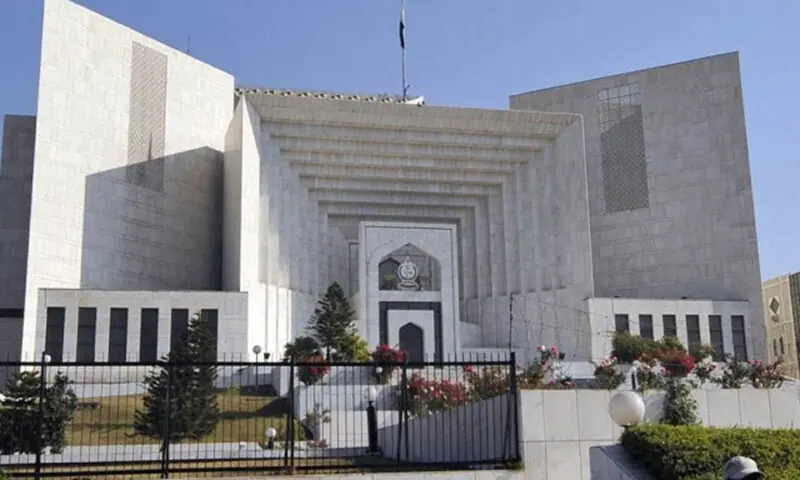
The Supreme Court of Pakistan has reaffirmed that the protection of women's legal rights and the preservation of female dignity remain non-negotiable constitutional imperatives, ruling unequivocally that women who assert their lawful freedoms must never face retaliatory violence with impunity. The apex court issued this decisive stance while dismissing an appeal filed by a convicted individual who murdered his former spouse merely two days after she secured a formal judicial decree dissolving their marriage. By upholding the lower courts' findings, the top court underscored that exercising legal remedies is an inherent right guaranteed to all citizens under the supreme law of the land.
Case Background and the Apex Court's Decisive Stance
The proceedings before the Supreme Court centered on a harrowing instance of gender-based retribution where a woman sought lawful separation through the judicial framework. Within forty-eight hours of obtaining a formal decree from the relevant family court dissolving the matrimonial tie, the ex-husband took her life. Following trial and subsequent appellate scrutiny, the convict approached the Supreme Court seeking relief or mitigation against his conviction.
In its comprehensive ruling, the bench firmly rejected the convict's plea, reiterating that the legal machinery exists precisely to resolve disputes through civilised, institutional mechanisms. When individuals resort to lethal force because they refuse to accept a lawful judicial outcome, the state’s criminal justice system must respond with full gravity to deter future lawlessness.
Constitutional Imperatives and Inviolable Human Dignity
The Supreme Court observed that the constitution explicitly binds the state and its judicial apparatus to safeguard the life, liberty, and dignity of every citizen. The apex bench noted that allowing individuals to commit violence against women who exercise their statutory entitlements would undermine the rule of law and dismantle public confidence in the judicial process.
Judicial decrees granting dissolution of marriage represent the lawful exercise of statutory protections available to women. The court made it clear that no societal convention, personal grievance, or misplaced sense of entitlement can supersede the constitutional mandate that protects vulnerable parties from harm when they approach the courts for legitimate redress.
What This Ruling Means for Ordinary Citizens
For ordinary families and individuals navigating matrimonial disputes or seeking relief through civil and family benches, this Supreme Court judgment carries profound practical significance. It provides a robust legal shield and sends a clear message across all levels of society that court orders must be respected unconditionally.
- Uncompromising Protection for Litigants: Women approaching family courts for dissolution of marriage, maintenance, or custody can rely on reinforced precedent establishing that pursuing legal rights cannot be used as an excuse for mitigation in violent offenses.
- Strict Deterrence Against Retaliation: Perpetrators of violence who attempt to justify their actions under the guise of family honor or personal dispute will find no leniency within the criminal justice appellate system.
- Clear Guidance for Subordinate Courts: Trial courts and high courts across Pakistan receive a direct institutional directive to treat violence against lawful court petitioners with utmost seriousness, ensuring swift and uncompromised justice.
- Strengthened Trust in Family Courts: By affirming that legal recourse must remain secure from post-decree retaliation, the apex court strengthens public faith in constitutional remedies rather than extrajudicial coercion.
Strengthening Judicial Precedents Against Gender-Based Violence
This authoritative judgment sets a standard for how appellate bodies view cases where fundamental human rights intersect with domestic disputes. The Supreme Court's refusal to extend leniency signals that the judiciary recognizes the structural vulnerabilities faced by women seeking marital dissolution through established legal channels.
Furthermore, the ruling reinforces the obligation of law enforcement agencies to maintain vigilant oversight when vulnerable litigants face threats after obtaining judicial decrees. Ensuring compliance with the rule of law requires not only fair trials inside the courtroom but also proactive deterrence against subsequent acts of vengeance outside it.
Citizens seeking authenticated certified copies of case records or detailed legal texts are encouraged to consult official law reports and the public registry of the Supreme Court of Pakistan.
Source: Dawn News
Get alerts in your inbox
Weekly roundup of Punjab schemes, Pakistan jobs, and Gulf opportunities.